THE PREP COUNTER
How to Cut a Butternut Squash Safely (Without Fighting It)
A step-by-step way to peel, halve and cube a butternut squash safely: the right board setup, the right knife, and the cuts that keep it from rolling.
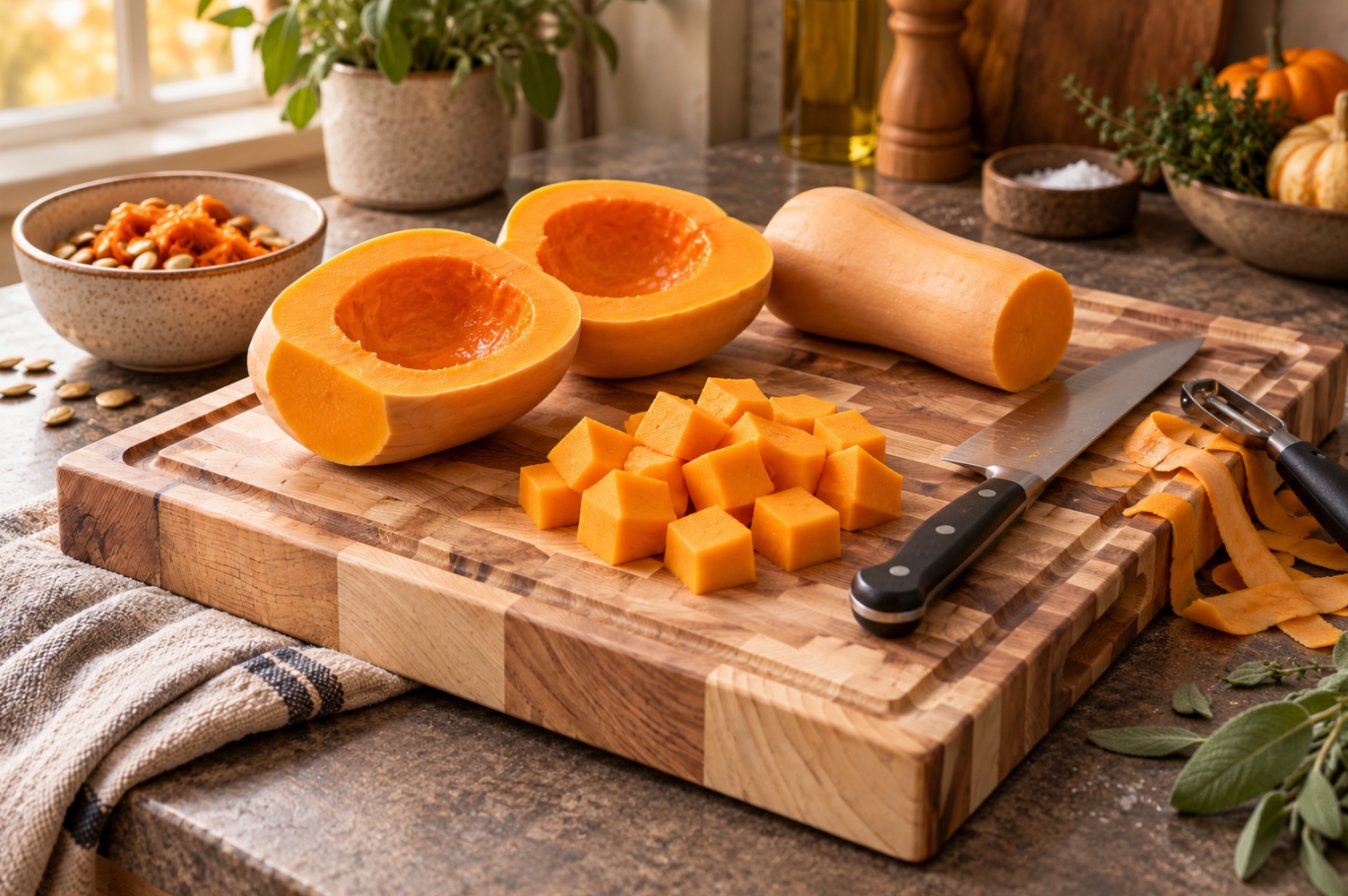
The short answer
To cut a butternut squash safely, set a large, heavy board on a damp towel and use a sharp chef's knife. Trim both ends so the squash has flat sides, then cut the neck from the bulb. Peel each piece standing up, scoop the seeds, and cube it one flat, stable piece at a time.
Butternut squash is one of the few vegetables that can actually fight back. It's dense, round, slippery once it's peeled, and big enough that a knife can get stuck halfway through. Most squash injuries happen the same way: the squash rolls, the knife slips, and a hand is in the wrong place.
The fix isn't strength. It's setup. Here's how to break one down safely, from a whole squash to even cubes.
What do you need to cut a butternut squash?
- A large, heavy cutting board. At least 15" x 11" so the whole squash fits with room to work. A light board will slide under the pressure it takes to get through the bulb.
- A damp towel or non-slip mat under the board.
- A sharp 8" to 10" chef's knife. A dull knife needs more force, and force is what causes slips. Skip small paring knives for the main cuts.
- A Y-peeler. It handles the thick skin better than a swivel peeler.
- A sturdy metal spoon for the seeds.
Before you start, make sure the board doesn't move when you push on one corner. If it does, fix that first. Our guide to keeping a maple cutting board from slipping covers the quick options.
Why does board size matter for squash?
A medium butternut squash is 8" to 12" long. On a small board, the squash hangs over the edge, your knife hand ends up off the board, and you can't lay the halves flat beside you. A board with a few inches of clear space on every side lets you keep each piece flat and stable while you work. If you're not sure your board is big enough, this breakdown of how to choose the right maple cutting board size explains what fits which jobs.
How do you cut a butternut squash step by step?
1. Soften the skin (optional, but it helps)
Pierce the skin a few times with a fork and microwave the whole squash for 2 to 3 minutes. Let it cool enough to handle. The skin peels more easily and the knife goes in with less force. It won't cook the flesh.
2. Cut off both ends
Lay the squash on its side. Slice about 1/2" off the stem end and the blossom end. Now the squash has two flat surfaces, and flat surfaces don't roll.
3. Separate the neck from the bulb
Find the point where the narrow neck meets the round bulb. Cut straight down there. This is the most important cut. You now have two pieces that can each stand on a flat end.
4. Peel each piece standing up
Stand the neck on its widest flat end. Peel downward in strips with the Y-peeler, or carefully slice the skin away with your chef's knife, following the curve. Do the same with the bulb. Peel until you see bright orange flesh with no pale green streaks under the skin.
5. Halve the bulb and scoop the seeds
Stand the bulb on its flat cut side and cut straight down through the middle. Scoop out the seeds and stringy fibers with the spoon. Save the seeds for roasting if you like.
6. Slice the neck into planks
Stand the neck on end and cut it in half lengthwise. Lay each half flat side down. Now cut it into planks, sticks, and then cubes.
7. Cube it evenly
Aim for 3/4" to 1" cubes so they cook at the same rate. Lay the bulb halves cut side down and slice them into strips, then cubes. The bulb pieces will be a little uneven because of the curve. That's fine for roasting or soup.
What should you do if the knife gets stuck?
Don't rock the knife, lift the squash with it attached, or lean your weight on the spine. Grip the handle, wiggle the blade back out the way it came in, and make a shallower cut. Then work deeper in two or three passes. A stuck knife usually means the piece wasn't flat or the first cut was too deep.
Which cutting board works best for hard winter squash?
Hard squash puts more downward pressure on the board than almost anything else you'll cut at home. A few things help:
| Board feature | Why it matters for squash |
|---|---|
| Large surface (15" x 11" or bigger) | Keeps the whole squash and your knife hand on the board |
| Weight / thickness (1.5"+) | A heavy board resists sliding under pressure |
| Non-slip feet or a damp towel | Stops the board from shifting mid-cut |
| Wood surface (end or edge grain) | Gives the blade a little grip, so it's less likely to skid than on glass or hard plastic |
| Flat, undamaged surface | A warped board rocks when you press down |
Glass and stone "boards" are the worst choice here. The knife skates across them, and they dull the edge fast.
How should you store and cook cut butternut squash?
- Fridge: cubes keep 4 to 5 days in an airtight container.
- Freezer: spread cubes on a tray, freeze, then bag them. They keep for months and roast well from frozen.
- Roasting: toss with oil and salt and roast at 400°F to 425°F for about 25 to 35 minutes, turning once, until the edges caramelize.
The bottom line
Cutting a butternut squash safely comes down to three things: a big, stable board that won't move, a sharp chef's knife, and creating flat surfaces before every major cut. Trim the ends, split the neck from the bulb, and work one stable piece at a time. Once you do it this way, squash stops being a fight.
Best for
- Peeled cubes: soups, purées and roasting trays.
- Halves or large wedges, skin on: roasting with less knife work, since the skin softens enough to eat.
- Microwaving first for 2 to 3 minutes: thick skin that fights the peeler.
- Freezing cubes on a tray: batch prep you can roast from frozen.
Frequently Asked Questions
Do you have to peel butternut squash?
No. If you're roasting halves or large wedges, the skin softens enough to eat. Peel it for cubes, soups and purées, where the texture matters.
Is it safe to microwave a whole butternut squash?
Yes, as long as you pierce the skin first so steam can escape. 2 to 3 minutes is enough to soften the skin without cooking the flesh.
Why is my hand itchy after peeling squash?
Raw butternut squash releases a sap that can leave a tight, dry or itchy feeling on some people's skin. It's harmless for most people and washes off. Wearing gloves while you peel avoids it.
What's the safest knife for butternut squash?
A sharp, full-size chef's knife. Serrated and small knives tend to bind or slip. Keep the blade sharp, since a sharp knife needs less force.
How big should butternut squash cubes be?
Aim for 3/4" to 1" cubes so they cook at the same rate. Bulb pieces will be a little uneven because of the curve, which is fine for roasting or soup.
What should you do next?
- Push on one corner of your board. If it moves, fix that before you start.
- Sharpen your chef's knife so the cuts take less force.
- Trim both ends and split the neck from the bulb before any other cut.
- Freeze extra cubes on a tray, then bag them.
- Use the same flat-side setup on softer produce with our guide to how to cut a mango.
SEE AN EXAMPLE
How this guide was put together
The Cutting Board Guide team writes and fact-checks every guide on The Cutting Board Guide. Comparisons are based on maker specifications, published standards and food-safety guidance from sources such as the USDA, and each guide is reviewed and updated when specs or prices change. More about us.